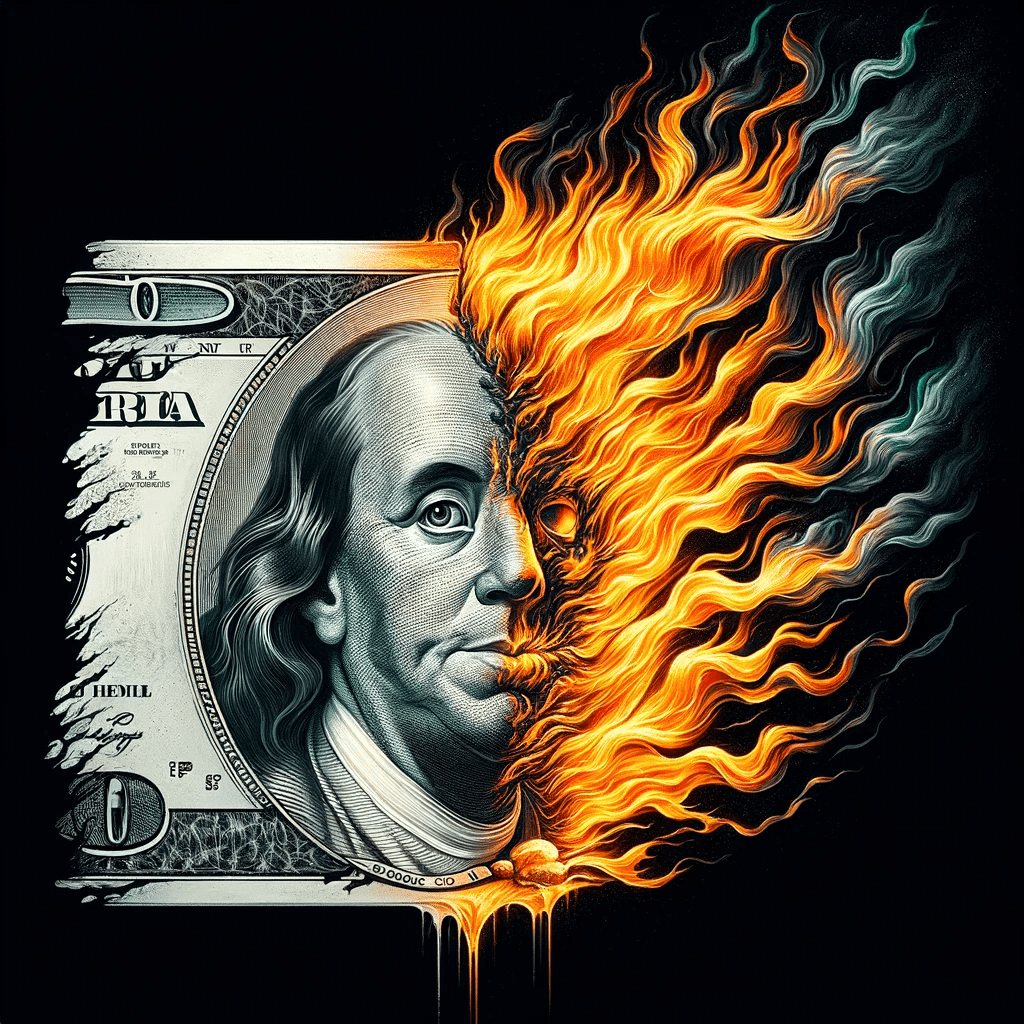
In a world where the rustle of banknotes and the clink of coins have been as rhythmic as the ticking of a clock, it’s almost revolutionary to imagine a day when money, as we know it, ceases to exist. The value and ideology of money have gyrated through the corridors of history, whispering different tales in the ears of kings and commoners alike. But what if, come tomorrow, money disappeared, dissolving into the annals of history like a myth long forgotten?
From the first Mesopotamian shekels to the digital dollars of today, money has been more than just a medium of exchange; it’s been a storyteller, a holder of value, and a symbol of power. In ancient times, money wasn’t merely a facilitator of trade but a marker of societal status and a tool for storing wealth. The Romans didn’t just use denarii for buying and selling; these coins bore the faces of emperors, intertwining wealth with power and propaganda.
Fast forward to medieval times, and we see money becoming a character in religious and ethical debates. The love of money, as the Bible famously warns, is the root of all evil. Yet, money’s role was paradoxical; it was both vilified and venerated, a necessary evil in a world growing increasingly complex.
The Industrial Revolution turned this complexity up a notch. Money became the lifeblood of capitalism, driving innovation, exploitation, and the transformation of societies. Wealth accumulation and capital growth became synonymous with progress. This era carved deep trenches between the haves and have-nots, a disparity still visible in today’s skyscraper-studded skylines.
In the modern era, the ideology of money has been a cocktail of consumerism, capitalism, and at times, confusion. Money has not just been about survival or status; it’s been about identity. What you earn, how you spend it, the brands you invest in – these have become chapters in the story of who you are.
But let’s indulge in a moment of speculative fiction. What if money disappeared tomorrow? Imagine waking up to a world where bank accounts are as empty as the promise of perpetual happiness from a shopping spree. At first glance, it may seem like a utopian dream – a world freed from the shackles of economic inequality, where goods and services are exchanged through barter or goodwill.
However, the disappearance of money would be no fairy tale. Money, in its current form, is the grease in the wheels of global trade. It’s a language understood across borders, a measure of value that, albeit imperfect, has enabled the exchange of everything from bread to supercomputers. The abrupt absence of this universal language would plunge the world into chaos, a Babel of bartering where the value of goods and services becomes as subjective as beauty in the eye of the beholder.
In this moneyless world, inequality might morph into new forms. Power could shift from those who have wealth to those who control resources. Imagine New York, a city where the power of the dollar is as iconic as the Statue of Liberty, now bartering its way through daily transactions. The Big Apple’s bustling streets could become a surreal marketplace where skills and goods are traded in a complex web of negotiations.
Moreover, the absence of money would upend our understanding of value. In today’s world, money is not just a physical entity; it’s a concept, an agreement. We trust that the numbers in our bank accounts have worth. This trust is the bedrock of economies. Remove it, and you shake the very foundations of modern society.
Yet, in this chaos, there might be a silver lining. A moneyless world could force humanity to reevaluate what truly holds value. Relationships, community, and sustainability might take center stage. We would have to relearn how to live, not as consumers, but as contributors to a society where success isn’t measured by wealth, but by well-being.
In conclusion, money, throughout history, has been a chameleon, changing its value and meaning with the times. It’s been a facilitator of progress and a catalyst for greed. Its disappearance would be both a nightmare and a revelation, forcing us to confront the very foundations of our societies. But as long as humanity thrives on innovation and interaction, some form of ‘money’ – whether physical, digital, or conceptual – will likely always exist. It’s not just a currency, but a constant conversation about what we value, a conversation as old as civilization itself.
Elias Turing
our experiment
 Erasmus